The Dome in the Pamir Mountains
The Dome in the Pamir Mountains
This story is about purpose.
Some moments stay with me far longer than the hotel budgets, RevPAR reports, or quarterly reviews I once spent so much time preparing.
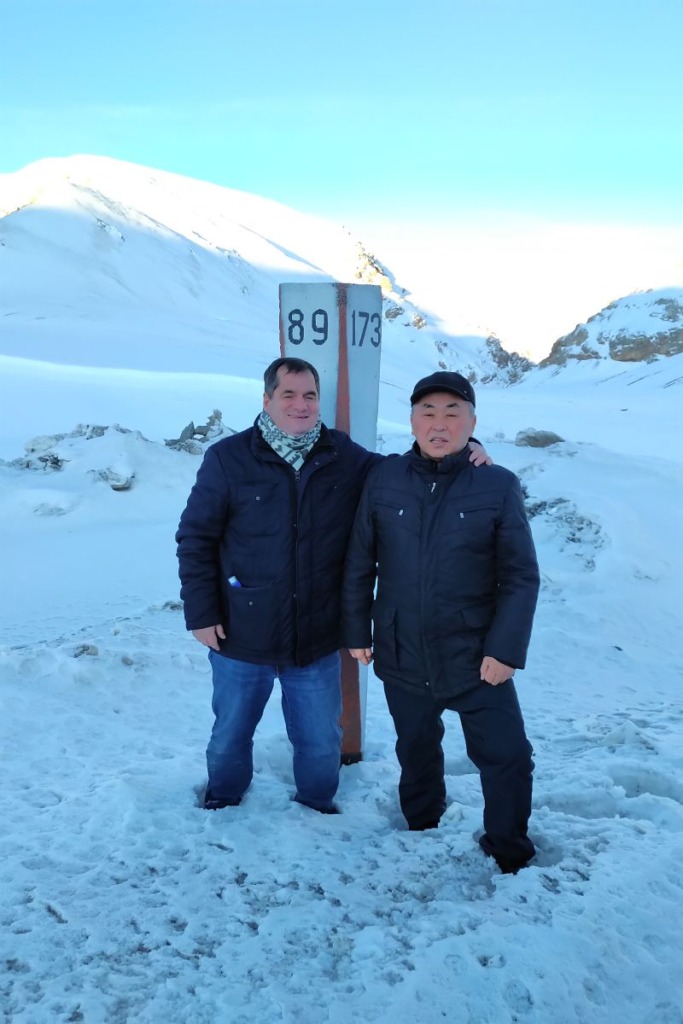
This photograph captures one of those moments.
Just before the COVID pandemic, I stood high in the Pamir Mountains of Kyrgyzstan with the owner of a small guesthouse from Osh.
Behind us stretched one of the most remote landscapes I have ever visited.
The cold was unforgiving. Yet the atmosphere was filled with optimism.
The year before this owner had joined a study tour I organised in Italy.
The objective was straightforward: to explore how agritourism could create new opportunities for small hospitality businesses.
While others were interested in improving existing operations, he spoke about something entirely different.
He had a dream.
He wanted to build a dome lodge high in the mountains, on the road between Osh and the Tajik border.
The M41, more commonly known as the Pamir Highway (Russian: Памирский тракт, romanised: Pamirsky Trakt), is a road traversing the Pamir Mountains across Afghanistan, Uzbekistan, Tajikistan, and Kyrgyzstan, with a length of over 1,200 km.
It sounded ambitious.
The location was remote.
The operating season was short. Infrastructure was limited.
Most advisers would probably have started by listing the risks.
Instead, we spoke about possibilities.
Not because optimism replaces analysis, but because good analysis should never extinguish genuine ambition.
Despite COVID, despite the lack of infrastructure, and despite difficult financing, he made his dream come true.
The lodge generated year-round employment for local families.
Young people who might otherwise have left their villages for poorly paid work abroad could now build a future closer to home.
Visitors discovered one of the world’s most extraordinary mountain landscapes.
One entrepreneur’s determination had quietly changed a small part of his community.
That project reminded me why I entered hospitality in the first place.
Throughout my career, I became fascinated by numbers.
- Occupancy
- ADR
- RevPAR
- GOP and EBITDA flow-through
- Cash flow
- Governance
They all matter.
Without them, businesses struggle to survive. But they are not the purpose.
They are the justification.
The real purpose lies elsewhere.
A profitable hotel creates opportunities for owners to invest.
It creates stable employment. It gives young people careers. It supports suppliers.
It pays taxes that, when used well, strengthen economies and communities.
It allows people to dream a little bigger than they otherwise could.
Whenever I review a hotel’s performance today, I still look at the numbers first.
But I try never to stop there.
Because somewhere behind every dashboard are people whose lives will be better—or worse—depending on the decisions those numbers help us make.
The dome in the Pamir Mountains reminded me that behind every KPI lies a purpose.
Lose sight of that purpose, and eventually the numbers lose their meaning.
Thank you for reading my story.
This story is part of a series—”The Banana Republic Hotel and What It Taught Me About Myself”—in which I share lessons learned throughout my professional and personal journey and how those experiences have shaped my thinking and led me to develop my own principles.
If you enjoyed reading the story and have the appetite to read another one, you are invited to visit G&A’s website, in particular its INSIGHTS page, where you can find all stories.
Alternatively, click here to be taken to the next story.
I hope it has provided some food for thought, encouraged curiosity, and inspired you to keep learning.
Curiosity, humility, and continuous learning remain among the most valuable tools we possess.
Terminology for non-hoteliers:
- SOP: Standard Operating Procedure – a documented process describing how a task should be performed to ensure consistency, quality, and compliance.
- KPIs: Key Performance Indicators – measurable indicators used to monitor performance and progress against objectives.
- ADR: Average Daily Rate – the average room rate paid by guests.
- RevPAR: Revenue per Available Room – a measure combining occupancy and room rate to assess hotel revenue performance.
- Occupancy: The percentage of available rooms that are occupied.
- DOF: Double Occupancy Factor – the average number of guests staying in each occupied room. A DOF of 1.0 means every occupied room has one guest; 2.0 means every occupied room has two guests.
- AGC: Average Guest Check – the average amount spent by each guest in a restaurant, bar, or other food and beverage outlet.
- CRS: Central Reservation System – the central booking system that manages a hotel’s room inventory, rates, and reservations across all sales channels.
- PMS: Property Management System – the software used to manage reservations, guest accounts, and hotel operations.
- OTA: Online Travel Agency – websites such as Booking.com or Expedia that sell hotel rooms on behalf of hotels.
- GDS: Global Distribution System – a worldwide booking network used by travel agents and corporate travel departments to reserve hotel rooms, flights, and other travel services.
- CRM: Customer Relationship Management – systems and processes used to manage guest relationships and marketing.
- F&B: Food & Beverage Department – all restaurant, bar, banquet, room service, and catering operations within a hotel.
- Half-Board: A hotel meal plan that includes breakfast and one additional meal each day, usually dinner. Drinks other than those specifically included are generally charged separately.
- MICE: Meetings, Incentives, Conferences and Events – the hotel business related to corporate meetings, conferences, exhibitions, and incentive travel.
- ERP: Enterprise Resource Planning – an integrated software system that connects key business functions such as finance, procurement, inventory, human resources, sales, and reporting into a single platform.
- USALI: Uniform System of Accounts for the Lodging Industry – the internationally recognised accounting standard used by hotels to measure and compare financial performance.
- GOP: Gross Operating Profit – the operating profit generated by the hotel before management fees, rent, financing costs, depreciation, taxes, and other non-operating expenses.
- EBITDA: Earnings Before Interest, Taxes, Depreciation and Amortisation – a widely used measure of an organisation’s operating profitability.
- COS: Cost of Sales – the direct cost of producing the goods sold, such as food, beverages, or merchandise, expressed as an amount or percentage of revenue.
- FTE: Full-Time Equivalent – a standard measure of staffing that converts part-time and seasonal employees into the equivalent number of full-time employees.
About the Author
Raoul Gransier is a Senior International Adviser and owner-focused hotelier with more than 30 years of operational and advisory experience in hospitality, tourism, governance, and performance improvement.
Website