Growing Pains in the Restaurant
Growing Pains in the Restaurant
This story is about how perseverance is often learned long before competence arrives.
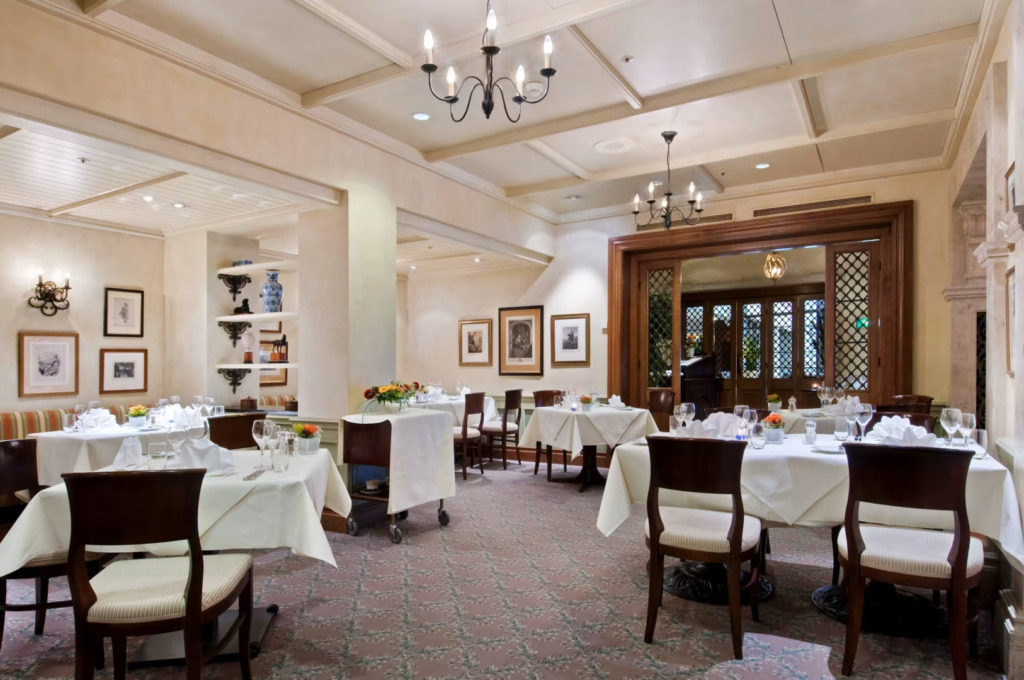
One of my earliest memories in hospitality dates back to my trainee period at a classical grand restaurant, one of the most prestigious dining establishments in town.
This was not merely a restaurant in the modern sense.
It belonged to a different era of hospitality.
Guests expected classical service, silver service, guéridon preparations, carving and flambéing at the table, and a level of product knowledge that is increasingly rare today.
I struggled with systems. I made mistakes continuously.
I mixed up dishes. I confused a Caesar Salad for Mixed Salad, Rösti with Pommes Frites, Chicken with Pork, and so on…
Orders arrived in the kitchen one way and occasionally emerged as something entirely different.
The Executive Chef, not my direct supervisor but obviously frustrated with me as a young man, took me aside and told me I was the worst trainee he had encountered in his career.
At the time, he was probably right, and his feelings were shared by many in both the kitchen and service teams.
Every day, before the dinner shift, the Maître d’Hôtel assembled the service brigade for a formal briefing.
It always began with questions about the menu delivered in almost military fashion.
We were expected to know every dish, every ingredient, every garnish, every wine pairing, the correct serving temperatures, and even which vintage might be most appropriate.
We were also expected to execute the full repertoire of classical service techniques, from guéridon service to carving and flambéing tableside.
Orders were committed to memory as they were taken, and executed.
No handheld devices, no POS terminals, no technology beyond the NCR cash registers.
The service brigade consisted of the best of the best, many of whom would later become celebrated sommeliers, fromagers, maîtres d’hôtel, restaurateurs, and hospitality professionals around the world.
The Maître d’Hôtel’s management technique was not to correct or reprimand those who did not know the answers to his questions.
The stares from the rest of the team did the job, and I received many of them.
Yet, for some reason, they kept me on the most prestigious shift: dinner service.
Looking back, I still do not know why.
It would have been easier to move me to polishing silverware or room service.
At the time, I would have considered that a demotion.
Later, I learned that those duties were no less important than any other role in the operation.
Hospitality is built on respect for every task, not just the visible ones.
I was a young kid, alone in a different country, trying to find my place in a profession I did not yet understand.
The venue I was working in was clearly in the highest league I could have found myself in.
To make matters worse, I was far too proud to admit how lost I felt.
Or that some evenings I cried myself to sleep.
What stayed with me was not the criticism.
It was what I chose to do with it. And what happened afterwards.
I became determined to face the failure. To understand.
Not to defend myself. Not to explain. To learn.
I started asking questions. I watched.
I listened. I practised.
Slowly, things started to make sense.
At the end of my training period, the same Executive Chef took me aside once again.
This time, he told me he had never experienced a trainee who had transformed so completely.
Looking back, this may have been one of the most important moments of my career.
Not because I received praise.
But because I learned something much more valuable.
Weaknesses are not permanent.
Provided one is willing to confront them.
Today, whenever I encounter something, I do not understand, I often think back to that restaurant and kitchen.
The lesson remains the same.
Failing at something is not the problem.
Refusing to learn is.
Thank you for reading my story.
This story is part of a series—”The Banana Republic Hotel and What It Taught Me About Myself”—in which I share lessons learned throughout my professional and personal journey and how those experiences have shaped my thinking and led me to develop my own principles.
If you enjoyed reading the story and have the appetite to read another one, you are invited to visit G&A’s website, in particular its INSIGHTS page, where you can find all stories.
Alternatively, click here to be taken to the next story.
I hope it has provided some food for thought, encouraged curiosity, and inspired you to keep learning.
Curiosity, humility, and continuous learning remain among the most valuable tools we possess.
Terminology for non-hoteliers:
- SOP: Standard Operating Procedure – a documented process describing how a task should be performed to ensure consistency, quality, and compliance.
- KPIs: Key Performance Indicators – measurable indicators used to monitor performance and progress against objectives.
- ADR: Average Daily Rate – the average room rate paid by guests.
- RevPAR: Revenue per Available Room – a measure combining occupancy and room rate to assess hotel revenue performance.
- Occupancy: The percentage of available rooms that are occupied.
- DOF: Double Occupancy Factor – the average number of guests staying in each occupied room. A DOF of 1.0 means every occupied room has one guest; 2.0 means every occupied room has two guests.
- AGC: Average Guest Check – the average amount spent by each guest in a restaurant, bar, or other food and beverage outlet.
- CRS: Central Reservation System – the central booking system that manages a hotel’s room inventory, rates, and reservations across all sales channels.
- PMS: Property Management System – the software used to manage reservations, guest accounts, and hotel operations.
- OTA: Online Travel Agency – websites such as Booking.com or Expedia that sell hotel rooms on behalf of hotels.
- GDS: Global Distribution System – a worldwide booking network used by travel agents and corporate travel departments to reserve hotel rooms, flights, and other travel services.
- CRM: Customer Relationship Management – systems and processes used to manage guest relationships and marketing.
- F&B: Food & Beverage Department – all restaurant, bar, banquet, room service, and catering operations within a hotel.
- Half-Board: A hotel meal plan that includes breakfast and one additional meal each day, usually dinner. Drinks other than those specifically included are generally charged separately.
- MICE: Meetings, Incentives, Conferences and Events – the hotel business related to corporate meetings, conferences, exhibitions, and incentive travel.
- ERP: Enterprise Resource Planning – an integrated software system that connects key business functions such as finance, procurement, inventory, human resources, sales, and reporting into a single platform.
- USALI: Uniform System of Accounts for the Lodging Industry – the internationally recognised accounting standard used by hotels to measure and compare financial performance.
- GOP: Gross Operating Profit – the operating profit generated by the hotel before management fees, rent, financing costs, depreciation, taxes, and other non-operating expenses.
- EBITDA: Earnings Before Interest, Taxes, Depreciation and Amortisation – a widely used measure of an organisation’s operating profitability.
- COS: Cost of Sales – the direct cost of producing the goods sold, such as food, beverages, or merchandise, expressed as an amount or percentage of revenue.
- FTE: Full-Time Equivalent – a standard measure of staffing that converts part-time and seasonal employees into the equivalent number of full-time employees.
About the Author
Raoul Gransier is a Senior International Adviser and owner-focused hotelier with more than 30 years of operational and advisory experience in hospitality, tourism, governance, and performance improvement.
Website